


If you have PCOS and are trying to get pregnant, this thought doesn’t go away:
“Why is it not happening yet?”
You may be trying regularly.
You may be tracking your cycles.
But your periods are unpredictable… and so are your expectations.
At some point, the confusion turns into doubt.
Let’s clear that properly.
Quick answers (so you don’t keep searching)
Can PCOS cause infertility?
Yes. It affects ovulation.
Can you still get pregnant with PCOS?
Yes, most women can.
Why does it take longer?
Ovulation is irregular or may not happen.
When should you see a doctor?
Don’t wait 6–12 months if cycles are very irregular.
How PCOS actually causes infertility?
Polycystic Ovary Syndrome affects how your ovaries release eggs.
And without ovulation, pregnancy cannot happen. Although we have learnt about ovulation in earlier standards, let me explain it to you once again because that is what actually matters for pregnancy.
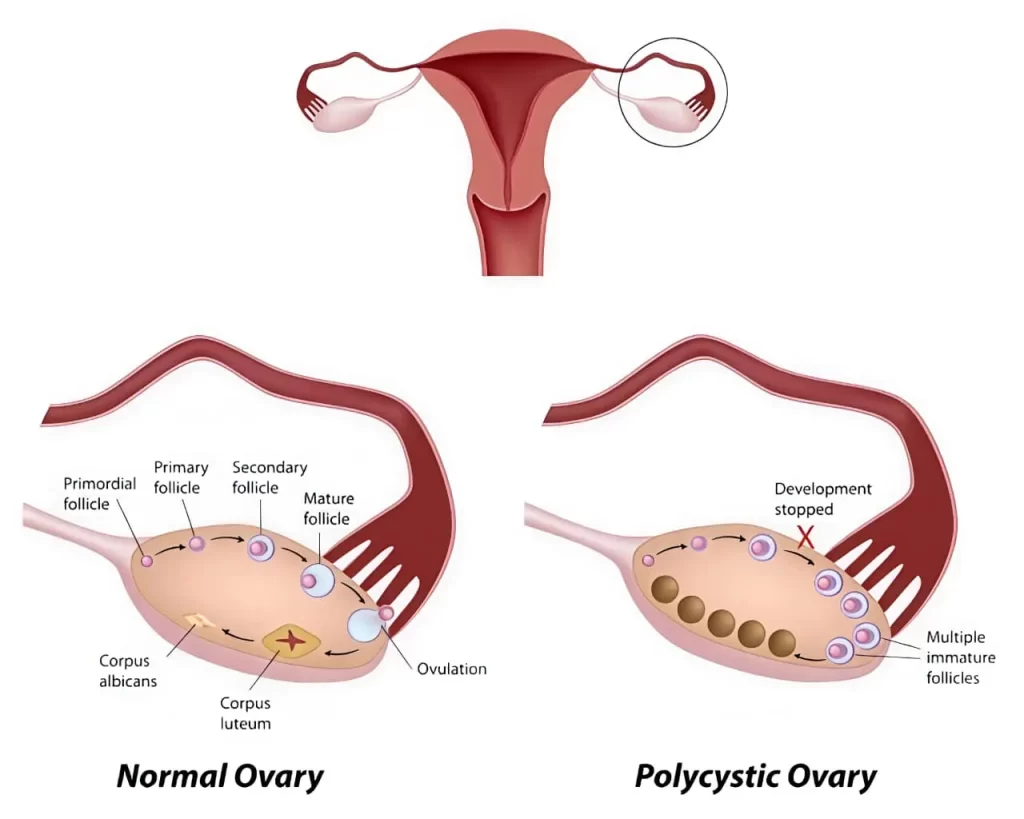
What is ovulation?
Ovulation is the moment your ovary releases an egg so it can potentially meet sperm and lead to pregnancy.
How ovulation actually happens? (step-by-step)
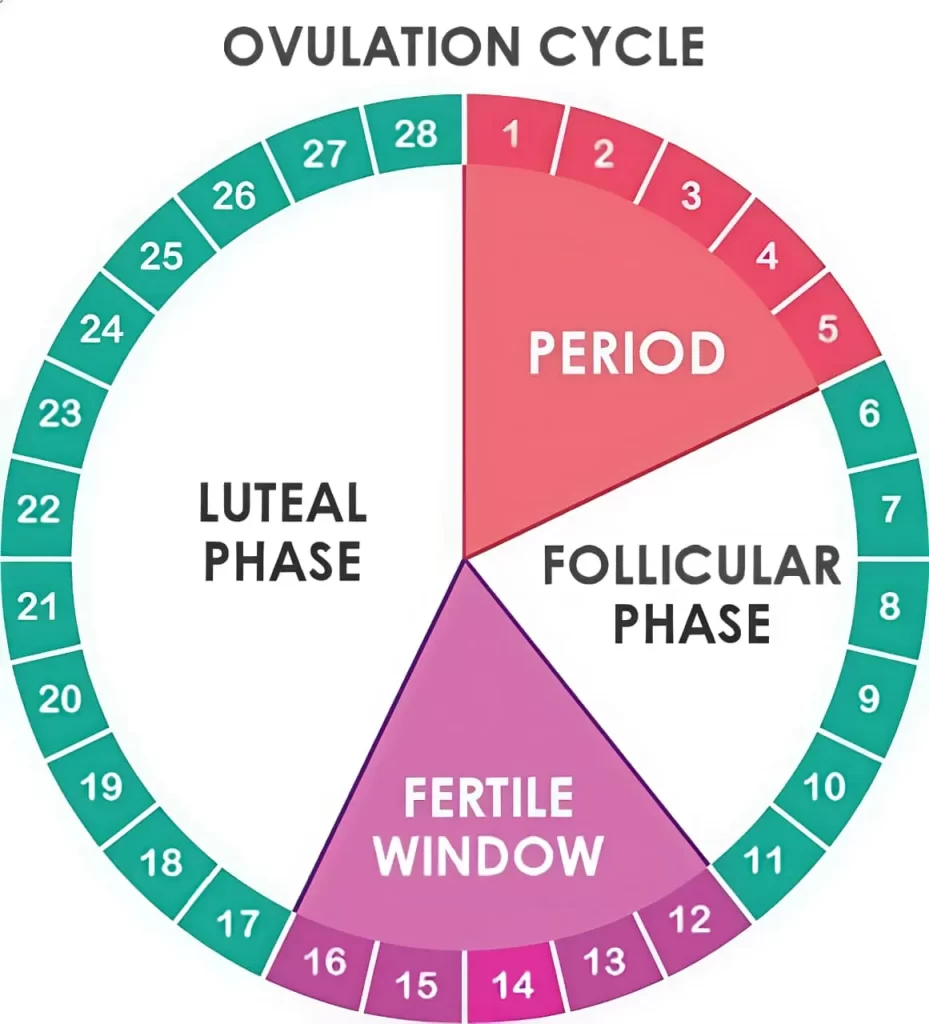
1. Your body prepares an egg
At the start of your cycle, your ovary begins developing a few tiny eggs.
Think of it like your body “testing” a few options.
2. One egg becomes dominant
Out of these, one egg grows properly and becomes mature.
This is the egg your body chooses for that cycle.
3. The egg is released (ovulation)
Around the middle of your cycle, the ovary releases this mature egg.
This is called ovulation.
4. The egg travels
The egg moves into the fallopian tube.
It stays alive for about 12–24 hours.
This is your fertile window.
5. Fertilisation may happen
If sperm is present during this time, it can meet the egg.
- If they meet → pregnancy can begin
- If not → the egg dissolves.
6. Your period starts (if no pregnancy)
If the egg is not fertilised:
- Hormone levels drop
- The uterus sheds its lining
- You get your period
And the cycle repeats.
Why does this matter in PCOS?
With Polycystic Ovary Syndrome:
- Eggs may not mature properly
- The ovary may not release an egg
- Or ovulation may happen very irregularly
So the whole process gets disrupted at step 2 or 3.
That’s why:
No ovulation = no chance of pregnancy that cycle
In one line
Ovulation is simply:
Your body preparing, selecting, and releasing one egg at the right time.
If that timing breaks, conception becomes difficult.
Does PCOS mean you can’t conceive?
No.
Most women with PCOS do get pregnant.
But:
- It may take longer
- It may need medical support
- It needs a structured approach
Trying month after month without understanding your cycle only adds frustration.
What actually improves your chances?
You don’t need random tips. You need the right sequence.
1. Restore ovulation
This is the first step.
Doctors may:
- Track your cycles
- Use medication to induce ovulation
2. Address the root imbalance
PCOS is influenced by:
- Insulin resistance
- Weight
- Lifestyle patterns
Even small, consistent changes can:
- Improve hormone balance
- Make ovulation more regular
3. Stop waiting without a plan
If nothing is changing, your approach needs to.
PCOS requires:
- Monitoring
- Timed intervention
- Adjustment based on response
When should you consult a gynaecologist?
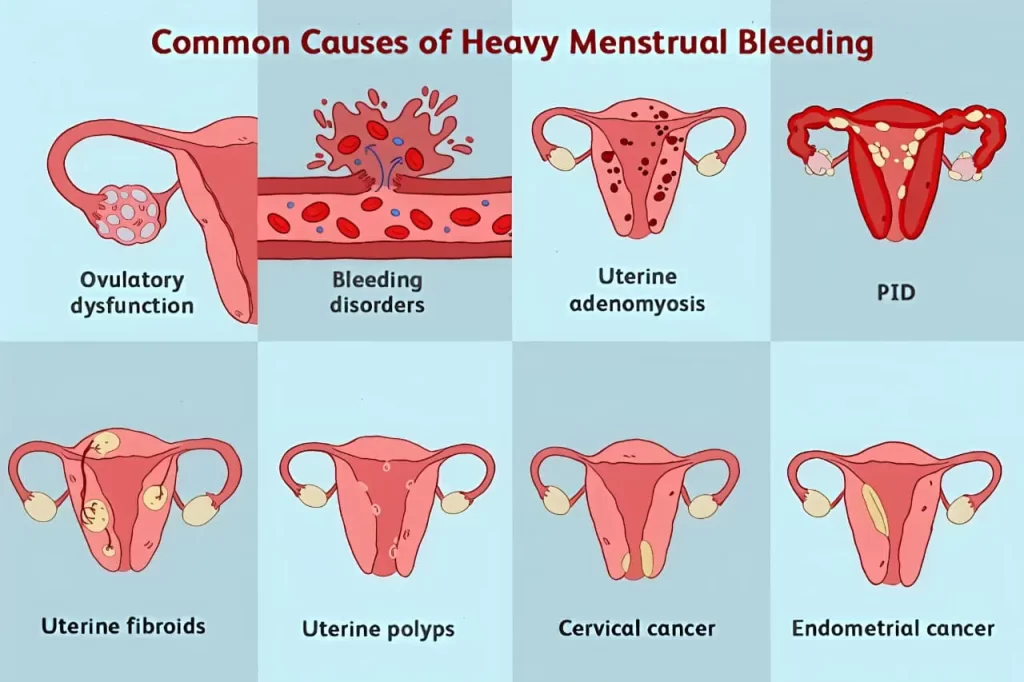
This is where clarity matters.
You should seek help if:
- You’ve been trying for 1 year (under 35)
- Your periods are very irregular, heavy or absent
- Your cycles happen only a few times a year
Don’t wait that long if:
- You already know you have PCOS
- You’re above 35
- You cannot identify ovulation at all
Early action reduces delay.
When it may not be “just PCOS”?
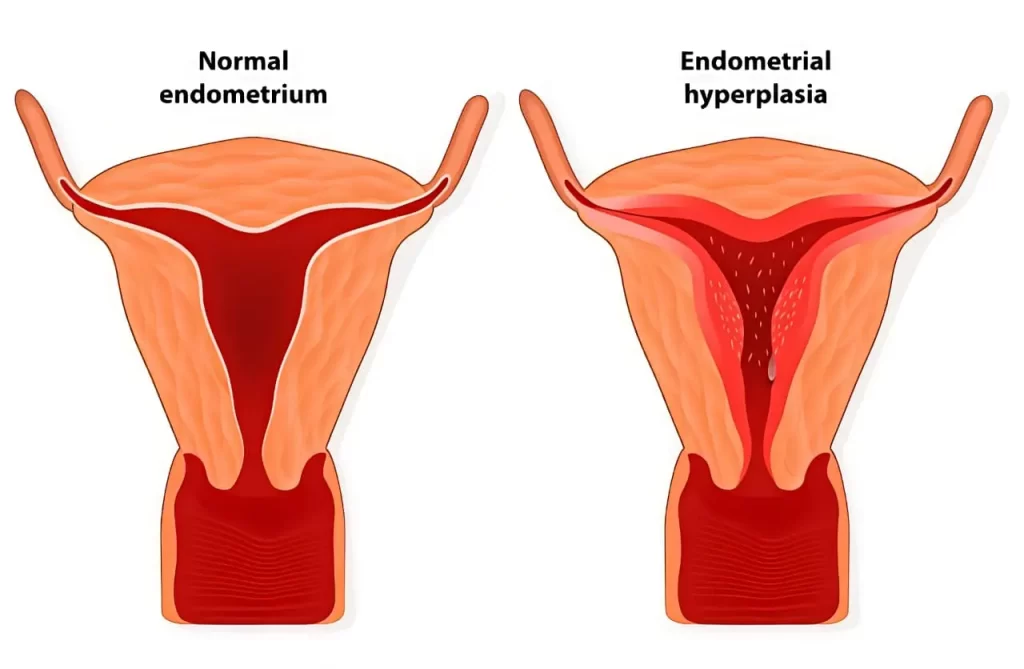
Many women get used to saying:
“It’s just my PCOS.”
But if something changes, it matters.
Long-term irregular cycles can lead to:
- Thickening of the uterine lining
- Abnormal or heavy bleeding
- Increased risk of Endometrial Cancer
Also, while most ovarian cysts are harmless, persistent or unusual symptoms should be evaluated to rule out conditions like Ovarian Cancer.
Signs you should not ignore
Get evaluated if you notice:
- Bleeding between periods
- Very heavy or prolonged bleeding
- Persistent bloating or pelvic pressure
- Pain that feels new or different
- Sudden change in your usual pattern
These are not typical PCOS patterns.
Where a specialist like me fits in?
Gynaecologists or fertility specialists manage most PCOS-related infertility.
That’s the right starting point.
But if:
- Your symptoms don’t follow the usual pattern
- Treatment isn’t working
- Or something feels different
Then a deeper evaluation becomes important.
My role is to ensure that nothing more serious is overlooked while treating a common condition.
What should you do next?
If you’re dealing with PCOS and trying to conceive:
- Track your cycles
- Don’t rely on guesswork
- Seek help early if cycles are very irregular
- Follow a structured treatment plan
And most importantly:
Make sure what you’re dealing with is truly PCOS, and nothing more.
FAQs (clear answers to common doubts)
Yes. PCOS disrupts ovulation, which is essential for pregnancy.
Yes. Many women conceive naturally, though it may take longer due to irregular ovulation.
If you’re under 35, try for up to a year.
But if cycles are very irregular, seek help earlier.
Hormonal imbalance prevents proper egg maturation and ovulation, which disrupts your cycle.
If you have unusual bleeding, persistent bloating, or new pain, you should get evaluated.
A final word
PCOS can delay pregnancy. But it does not take away the possibility.
What makes the difference is:
- Understanding what your body is doing
- Acting at the right time
- And not ignoring changes
Because in most cases, the problem is not that nothing is working.
It’s that no clear plan is in place yet.