


Yesterday, I met a woman who was just 35. She came in with irregular menstruation. After her tests, the diagnosis was cervical cancer.
Cases like hers stay with me. She is young, has a family, and should not have been facing a disease that is now largely preventable.
Part of the problem is timing. India did not have access to the HPV vaccine until around 2008. Before that, women had no opportunity for vaccination.
Even after its availability, public vaccination programmes were slow to start. The first significant state-run programme came only in 2018, and India’s own vaccine, CERVAVAC, was launched in 2023.
That long gap meant an entire generation of women grew up without protection.
This is why we still see young women diagnosed late. Screening and vaccination were delayed for years. Now that both are available, using them consistently is the only way to reduce stories like hers.
Understanding the Numbers: Why Indian Women Need to Pay Attention
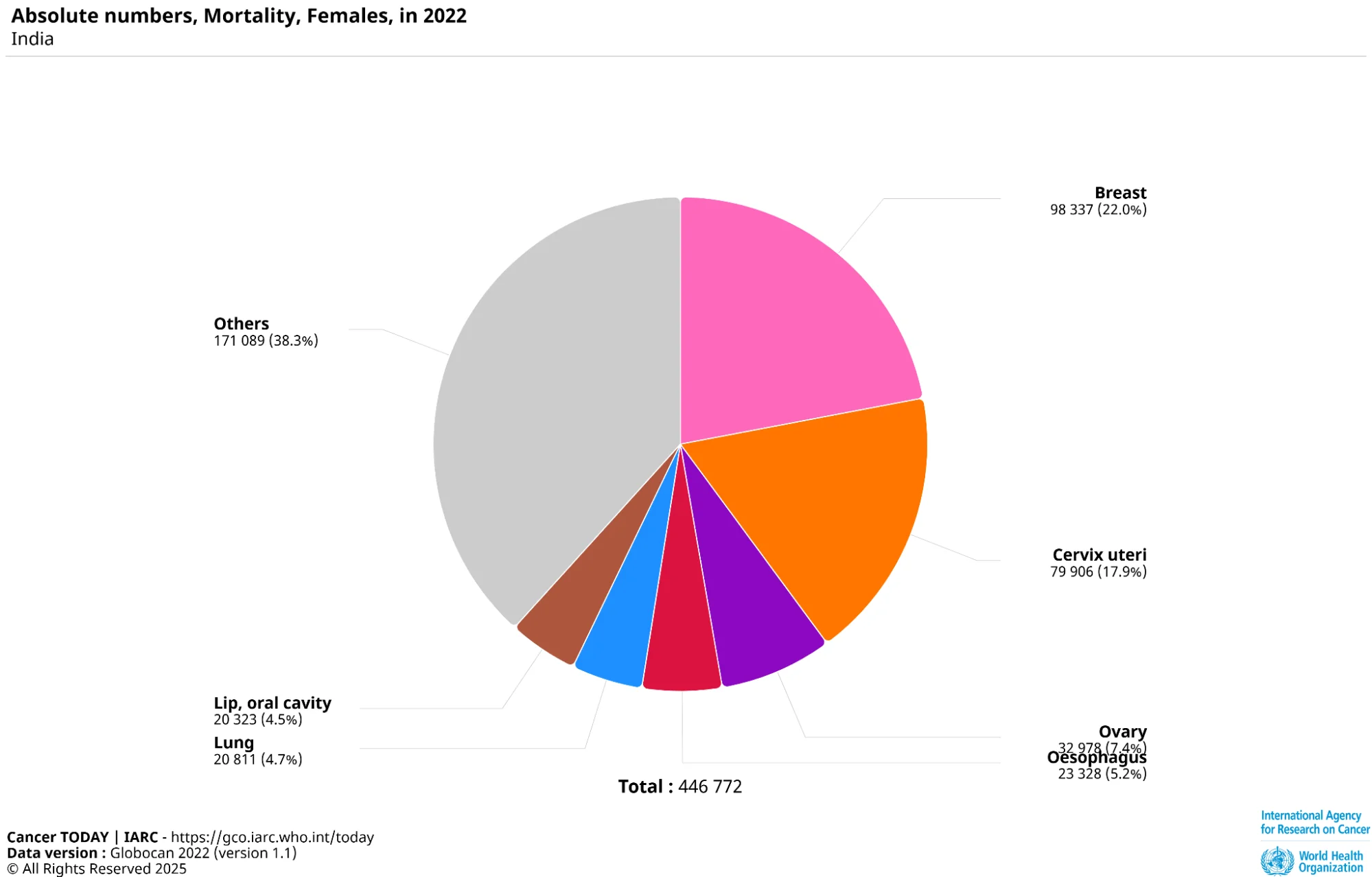
Let me share some eye-opening statistics with you. According to recent data from the International Agency for Research on Cancer, cervical cancer accounts for 17.9% of all female cancer deaths in India. That’s 79,906 women who lost their lives in 2022 alone.
Think about that for a moment. Nearly 80,000 mothers, daughters, sisters, and friends, gone too soon from a largely preventable disease.
The total number of female cancer deaths in India reached 446,772 in 2022. Breast cancer led the numbers at 22%, followed by cervical cancer. But unlike many other cancers, cervical cancer gives us a fighting chance through regular screening.
What Exactly Is Cervical Cancer?
Let me explain this simply. Your cervix is the lower part of your uterus that connects to your vagina. Cervical cancer starts in this area. It doesn’t happen overnight. It develops slowly, often over many years.
Here’s what most people don’t realise: cervical cancer is almost always caused by the Human Papillomavirus (HPV). This is a common virus. Many women get it at some point in their lives. Usually, your body fights it off on its own.
But sometimes, the virus stays. When it persists for years, it can cause changes in cervical cells. These changes can eventually turn into cancer.
The good part? This slow development gives us time to catch it early through screening.
Why Screening Matters So Much
I’ll be honest with you. Most women I see with advanced cervical cancer haven’t had regular screenings. They either never got tested or it had been years since their last check-up.
This breaks my heart because cervical cancer is highly treatable when caught early.
Regular cervical cancer screening does two important things:
It finds problems before they become cancer. Screening tests can spot abnormal cells early. We can treat these cells before they turn cancerous. This is prevention at its most valid.
It catches cancer at an early stage. When cervical cancer is detected early, treatment is much more effective. Survival rates are excellent. Quality of life remains good.
Think of screening like maintaining your car. Regular check-ups catch minor issues before they become expensive problems. Your health deserves the same attention.
When Should You Start Getting Screened?
This is one of the most common questions I hear in my Bhubaneswar clinic. The answer depends on your age.
Ages 21-29: You should get your first Pap test at age 21. After that, get tested every three years. Yes, even if you’re not sexually active, you should start at 21.
Ages 30-65: This is when you have options. You can choose:
- An HPV test every 5 years
- A combination HPV and Pap test (co-test) every 5 years
- A Pap test every 3 years
I usually discuss with my patients which option works best for their situation.
Ages 65 and older: Talk to your doctor. If you’ve been screened regularly with expected results, you might not need more screening. But if your tests were abnormal or you missed screenings, you should continue.
The Reality: Why Women Skip Screenings
I understand why many women in Bhubaneswar and across Odisha avoid getting screened. I’ve heard all the reasons:
“I feel fine. I don’t have any symptoms.”
This is exactly why screening is crucial. Early cervical cancer rarely causes symptoms. By the time you feel something, the cancer may have advanced.
“I’m too busy with work and family.”
I get it. Life is demanding. But this test takes less than an hour. It could save your life. Your family needs you to be healthy.
“I’m embarrassed.”
Many women feel uncomfortable with pelvic examinations. I promise you, as a gynaecological oncosurgeon, I perform these tests with complete professionalism and sensitivity. Your comfort and dignity always come first.
“I can’t afford it.”
Cost shouldn’t stop you from getting screened. Many government programs offer free or low-cost screenings.
What Happens During Cervical Cancer Screening?
Let me walk you through the process so you know what to expect.
A Pap test is quick and simple. You lie on an examination table. We insert a speculum to see your cervix. Then, a small brush or spatula gently collects cells from your cervix. These cells go to a lab for examination.
Does it hurt? Most women feel only mild pressure or discomfort. It lasts only a few seconds.
An HPV test works similarly. Sometimes, the same cell sample used for a Pap test can be tested for HPV. This is what we call a co-test.
The entire appointment usually takes 10-15 minutes.
How is cervical cancer diagnosed?
Regular pelvic exams, Papanicolaou (Pap) tests and/or HPV tests help find abnormal cells in the cervix before cancer develops.
Warning Signs You Shouldn't Ignore
While early cervical cancer has no symptoms, advanced cancer does show signs. Contact an oncosurgeon in Bhubaneswar immediately if you experience:
- Unusual vaginal bleeding (between periods, after sex, or after menopause)
- Watery, bloody vaginal discharge that may be heavy and smell bad
- Pelvic pain
- Pain during sexual intercourse
These symptoms don’t always mean cancer. Other conditions cause them too. But you need to get checked.
Who's at Higher Risk?
Some women face an increased risk of cervical cancer. You’re at higher risk if you:
- Are over 30 years old
- Have a long-lasting HPV infection
- Smoke tobacco
- Have HIV or another condition that weakens your immune system
- Have had multiple sexual partners
- Became sexually active at a young age
- Have a family history of cervical cancer
If any of these apply to you, talk to your doctor about more frequent screening.
How to Reduce Your Risk
You’re not helpless against cervical cancer. Here’s what you can do:
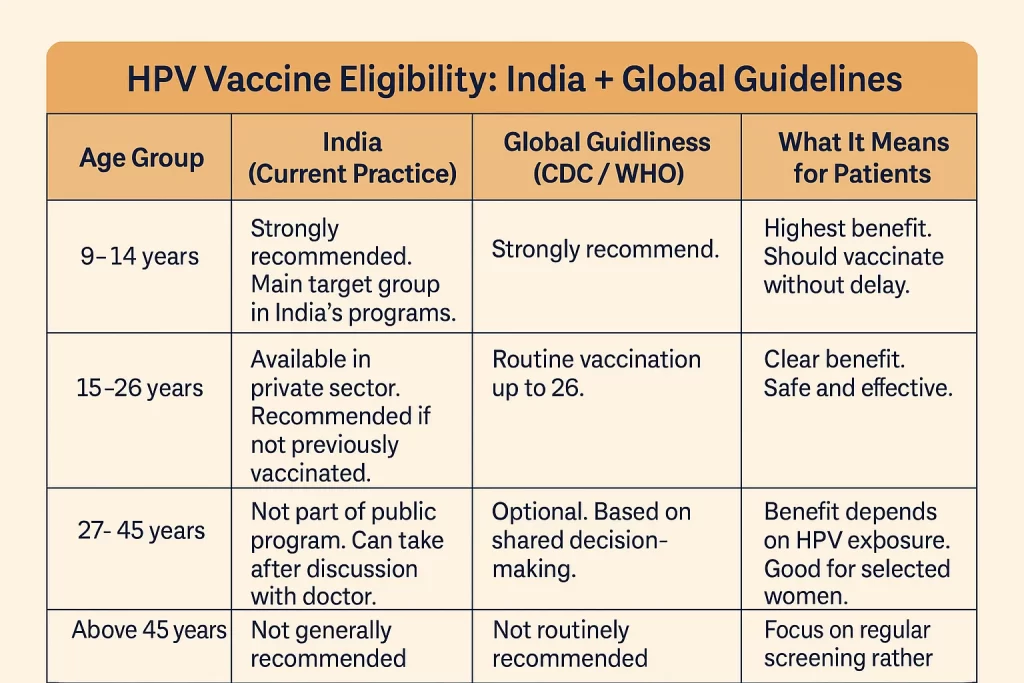
- Get the HPV vaccine. If you’re 26 or younger and haven’t been vaccinated, do it now. The vaccine protects against the HPV types that cause most cervical cancers.
- Don’t smoke. Smoking doubles your risk of cervical cancer. If you smoke, quitting is one of the best things you can do for your health.
- Practice safe sex. Use condoms consistently. While they don’t offer complete protection against HPV, they do reduce your risk.
- Get screened regularly. I can’t stress this enough. This is your most powerful tool against cervical cancer.
Cervical Cancer Treatment: What Are Your Options?
If screening detects cancer, modern cervical cancer treatment offers hope. Treatment depends on the stage and type of cancer. Options include:
- Surgery: For early-stage cancer, surgery may remove the cancerous tissue. Sometimes this means removing the cervix and uterus (hysterectomy).
- Radiation therapy: High-energy beams target and kill cancer cells.
- Chemotherapy: Drugs destroy cancer cells or prevent their growth.
- Targeted therapy: Newer treatments attack specific cancer cells while sparing healthy tissue.
As an oncosurgeon in Bhubaneswar, I create personalised treatment plans. Every woman’s situation is different. Your treatment depends on your cancer stage, overall health, and personal preferences.
Early detection means more treatment options. It means better outcomes. It means life.
My Message to You, As an Oncosurgeon in Bhubaneswar
Over the years, I’ve treated countless women with cervical cancer at my Bhubaneswar practice. I’ve seen the devastating impact of late diagnosis. I’ve also witnessed the relief and gratitude when we catch cancer early.
You have the power to protect yourself. Regular cervical cancer screening is simple, quick, and potentially life-saving.
Don’t wait for symptoms. Don’t put it off another year. Your health deserves priority.
If you’re due for screening or have concerns about cervical cancer, I’m here to help. As a dedicated oncosurgeon in Bhubaneswar, I provide compassionate, expert care for all gynaecological cancers.
Schedule your cervical cancer screening today. It’s one appointment that could save your life.
Cervical cancer is preventable. It’s treatable. But only if you take that first step. Get screened. Stay healthy. Live well.