


A Guide by Dr. Ushashree Das, Gynecologic Cancer-Surgeon in Bhubaneswar
Cancer is never an easy topic to discuss, but understanding symptoms early helps women make informed decisions about their health. Many women I meet delay their first consultation because they feel their symptoms are “too small,” “too common,” or “not serious enough.” In reality, early signs of cervical cancer or ovarian cancer often appear subtle and easily overlap with normal, everyday changes.
The goal of this guide is to help you recognise patterns, understand what is normal, and know when a symptom requires medical attention. Awareness leads to earlier evaluation, and earlier evaluation leads to better outcomes.
Why These Gynecological Cancers Need Attention
According to GLOBOCAN 2022 (IARC), cervical cancer remains one of the leading cancers among Indian women. Ovarian cancer, although less common, contributes significantly to mortality because it is often diagnosed at later stages.
The challenge with these cancers is not always the severity of symptoms, but how easily their symptoms blend into routine life.
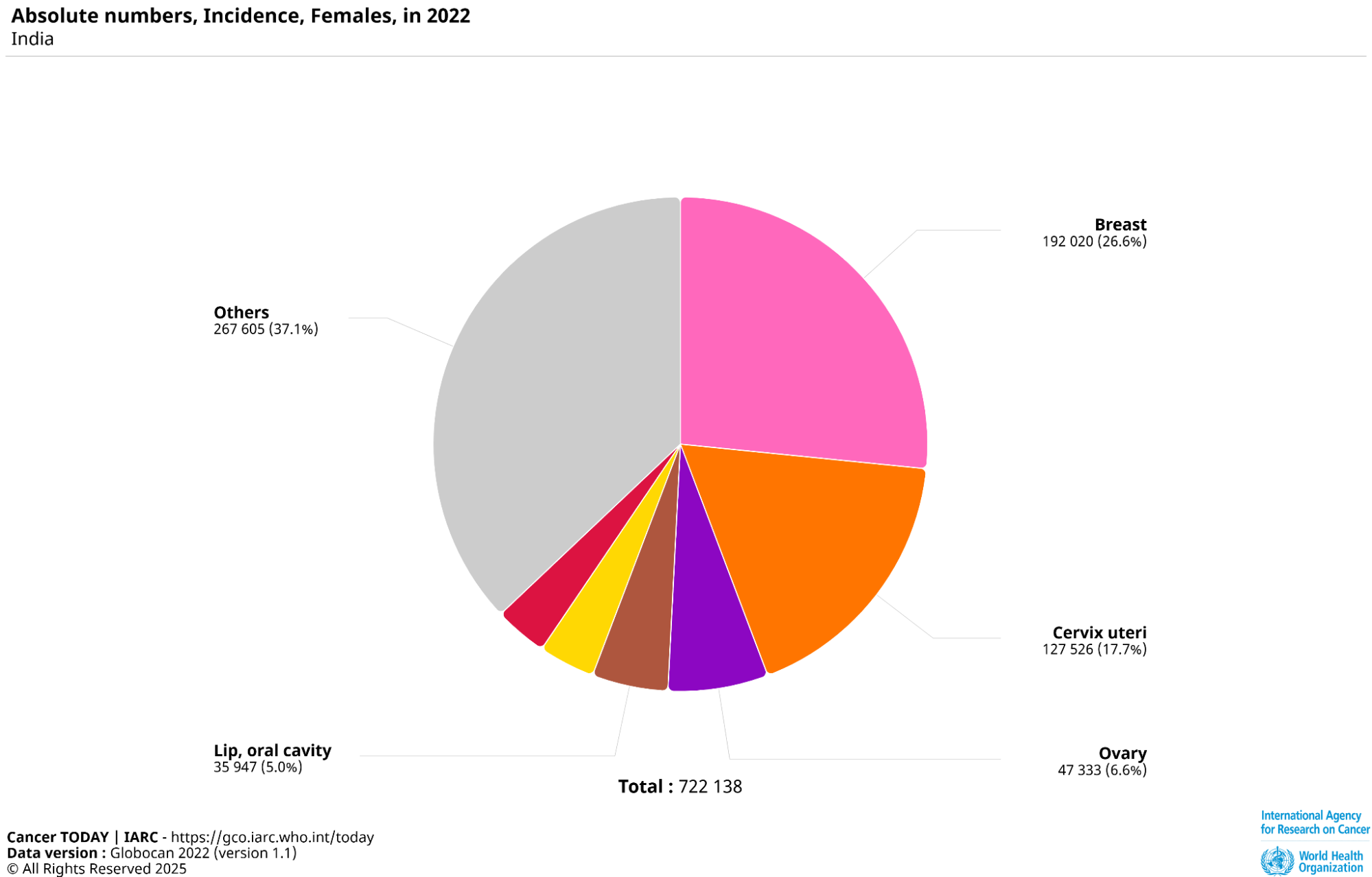
Cervical cancer is the second most common, contributing 17.7% (127,526 cases). Ovarian cancer accounts for 6.6% (47,333 cases).
However, recognising the difference between harmless changes and persistent symptoms is essential.
Understanding the Signs of Cervical Cancer
Cervical cancer usually develops slowly, and early stages often do not cause symptoms. However, when symptoms appear, they follow certain patterns.
What Can Be Mistaken for Signs of Cervical Cancer
Many everyday issues mimic cervical cancer symptoms. These include:
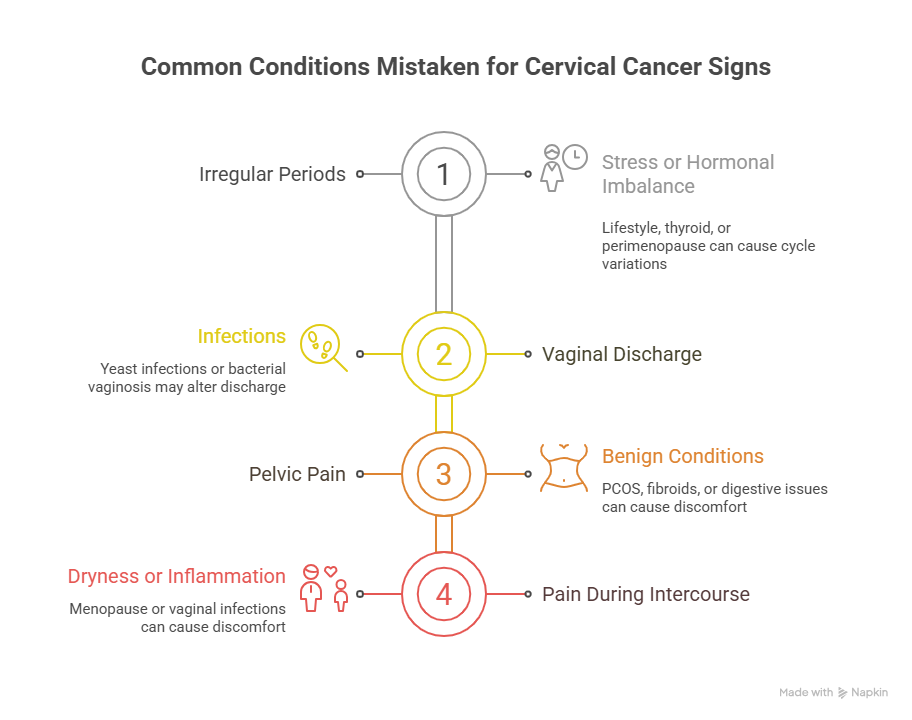
These conditions are common and often resolve with basic treatment. What matters is persistence and whether the pattern feels unusual for your body.
How Cervical Cancer Symptoms Actually Feel
1. Abnormal Vaginal Bleeding
Women often describe:
- Bleeding between periods
- Spotting after intercourse
- Bleeding after menopause
- Heavier or longer-than-usual periods
The key sign is unexpected or repeated bleeding.
2. Unusual Vaginal Discharge
Patients typically say:
- “It feels different from my usual infections.”
- “It keeps returning even after treatment.”
Discharge may be watery, blood-streaked, or have a new odor.
3. Pelvic or Lower Back Pain
Many describe this as:
- A low, dull ache
- Pressure deep in the pelvis
- Discomfort that lasts for weeks, not days
This pain rarely follows menstrual patterns.
4. Pain During Intercourse
Women say the pain feels:
- Deeper than surface irritation
- Sharp or uncomfortable inside
New and persistent
5. Leg Swelling or Constant Back Pain (Advanced Stages)
This occurs when cancer presses on nerves or blood vessels.
If any of these changes persist for more than two to three weeks, an evaluation is appropriate. Persistent symptoms do not always mean cancer, but they deserve attention.
Cervical cancer and ovarian cancer affect different parts of a woman’s reproductive system, and they behave very differently. While cervical cancer often gives early warning signs and has established screening tests, ovarian cancer tends to be more subtle.
Many women assume both cancers show similar symptoms, but that is not the case. Understanding these differences helps you recognise when something deserves attention. With that in mind, let us look at the symptoms of ovarian cancer and how they can appear in everyday life.
Understanding Ovarian Cancer Symptoms
Ovarian cancer is often diagnosed late because its symptoms resemble common digestive or urinary issues. There is no general screening test, so symptom awareness remains the first line of defence.
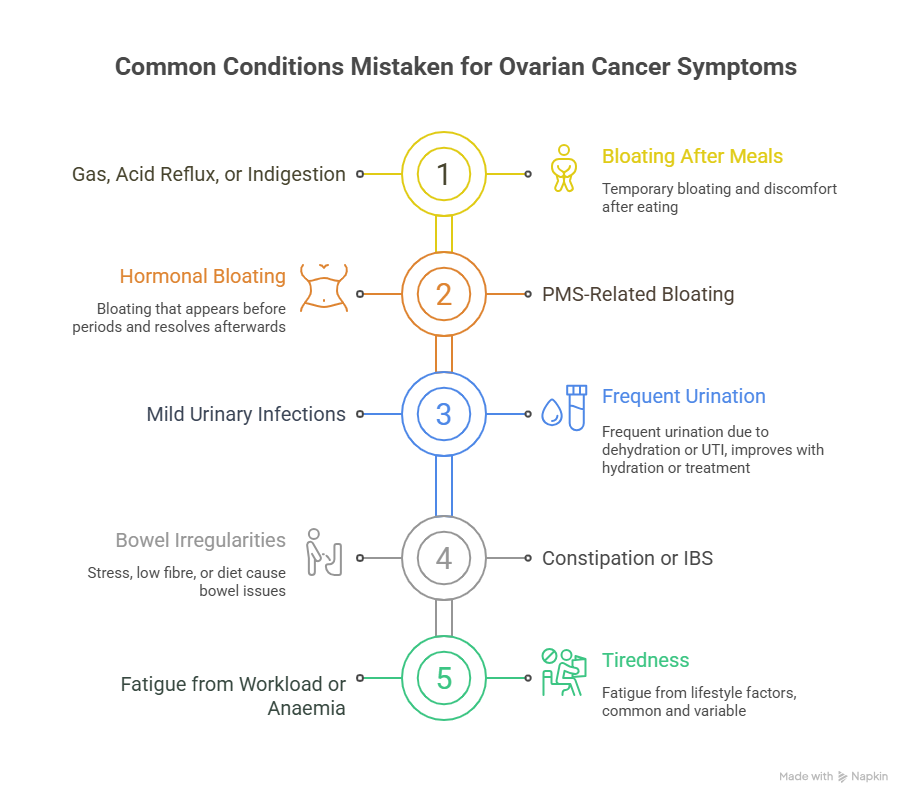
What Can Be Mistaken for Ovarian Cancer Symptoms
Several normal conditions resemble early ovarian cancer:
How Ovarian Cancer Symptoms Actually Feel
1. Persistent Abdominal Bloating
Women say:
- “My stomach feels full all the time.”
- “The bloating doesn’t improve even when I eat light.”
This is not meal-related bloating.
2. Early Fullness While Eating
Patients describe:
- Feeling full after a few bites
- Reduced appetite
- A persistent sense of heaviness
This symptom is consistent rather than occasional.
3. Pelvic or Abdominal Pain
This pain feels:
- Deep, dull, and ongoing
- Located in the lower abdomen
Unrelated to menstrual cycles
4. Urinary Frequency or Urgency
Women report:
- Needing to urinate more often
- Feeling pressure even after urinating
No improvement despite treatment
5. Bowel Habit Changes
Ongoing constipation or sudden loose stools without infection are common patterns.
6. Unexplained Fatigue or Weight Changes
This includes:
- Gradual weight loss or gain
- Fatigue that continues for weeks
Clothes feel tighter due to bloating
7. A General Feeling That Something Is Not Right
Many women say:
- “It wasn’t painful, but it didn’t feel normal.”
This instinctive awareness should not be ignored.
When Should You Consult a Gynecologic Cancer-Surgeon in Bhubaneswar?
Seek medical advice if:
- Symptoms last more than 2–3 weeks
- They occur frequently (more than 12 times a month)
- They differ from your usual patterns.
- They continue despite routine treatment.
- You feel unsure and want clarity.
Early evaluation does not mean early cancer. It simply ensures timely care.
A Message from Dr. Ushashree Das
In my practice, I often meet women who delay their visit because their symptoms feel minor. Many later say they wish they had acted sooner. My advice is simple: listen to your body. If a symptom is persistent, unusual, or concerning, it deserves attention.
You do not need to wait for severe symptoms. Early evaluation can provide reassurance, guidance, and in many cases, timely treatment. If you have concerns about cervical or ovarian symptoms, my team and I are here to support you with compassionate, evidence-based care.